
ESRS Reporting Workflow and Datapoint Management
GOVERNED ESRS REPORTING WORKFLOW
Governed Source Data
Documented Scope and Methods
Reviewable Evidence

Understanding ESRS Standards
How Our ESRS Reporting Workflow Supports Your ESG Journey
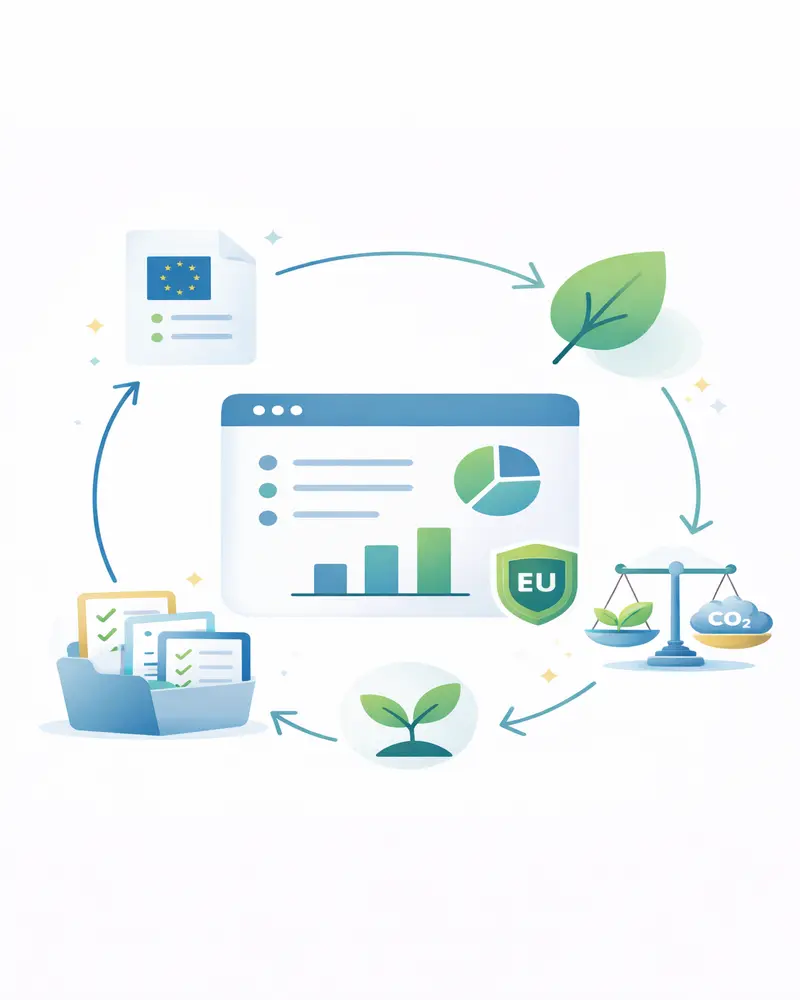
Reliable ESRS reporting workflow begins with a documented scope, accountable data owners and a clear record of the requirements that apply. Ledger2Carbon connects source information to methods, decisions and supporting evidence so teams can explain how each material result was prepared.
Our ESRS Reporting Workflow for Full Implementation
Requirement Mapping
Map applicable disclosures to reporting entities, material topics, datapoints, owners and deadlines.
Materiality Evidence
Retain assessment criteria, stakeholder inputs, decisions and approvals supporting materiality conclusions.
Metric Definitions
Govern definitions, units, boundaries, calculation methods and comparative-period treatment.
Get in Touch with US
Reach out to us for expert guidance on carbon accounting and ESG reporting. Our team is ready to assist you with tailored solutions to meet your sustainability goals.
Phone
(359) 889-537-131
contact@ledgertocarbon.com
Address
Mladost 1A, 9 Anna Ahmatova Str., Sofia, 1000
Contact Form
Offices
Sofia
Mladost 1A, 9 Anna Ahmatova Str.
Plovdiv
16 Georgi Valkovich Str.
Varna
90 Tsar Osvoboditel Blvd.
Your ESRS Standards Questions Answered
Get clarity on the essential aspects of ESRS standards and how Ledger2Carbon can assist you in meeting these requirements efficiently.
What are the key components of ESRS standards?
ESRS standards encompass a comprehensive framework for environmental, social, and governance disclosures, focusing on transparency and accountability in corporate reporting.
How does Ledger2Carbon facilitate ESRS compliance?
Ledger2Carbon offers an integrated platform that automates data collection, enhances auditability, and streamlines the reporting process, ensuring adherence to ESRS standards.
Why is ESG reporting important for businesses?
ESG reporting is crucial for demonstrating corporate responsibility, attracting investors, and ensuring long-term sustainability by addressing environmental and social impacts.

How the workflow is governed
How ESRS reporting workflow organizes the reporting process
Start by identifying the applicable reporting basis, reporting entity, users of the information, material topics and disclosure requirements. Assign each datapoint an owner, source, methodology, evidence status, reviewer and due date so the report is built from governed records rather than disconnected documents.
Materiality, datapoints and evidence
Materiality determines what information belongs in the report; it does not remove the need to document the assessment. Quantitative metrics should retain definitions, units, boundaries and calculation methods. Narrative disclosures should link to approved policies, actions, targets and supporting records.
Framework mapping without treating standards as interchangeable
The workflow can support ESRS 1, ESRS 2 and applicable topical ESRS. CSRD is legislation, ESRS and IFRS S1/S2 are disclosure standards, GRI focuses on organizational impacts, and SBTi addresses target setting. One dataset may be reused, but each framework keeps its own materiality lens, terminology and requirements.
Standards and applicability
The workflow can organize records for ESRS 1, ESRS 2 and applicable topical ESRS. The applicable edition, reporting boundary, jurisdiction, methodology and verification expectation must be documented for the specific organization or project.
Frameworks are not interchangeable
Legislation, disclosure standards, accounting methodologies, certification programmes and implementation guidance serve different purposes. Shared data may be reused, but scope, terminology, controls and claims must remain specific to each framework.
Experience Our Platform Firsthand
Discover how Ledger2Carbon can transform your ESG reporting. Schedule a demo today to see our platform in action and learn how it can streamline your sustainability efforts.