
GOVERNED CIRCULAR ECONOMY FRAMEWORK IMPLEMENTATION
Circular Economy Framework Implementation with the EMF Approach
Circular economy framework implementation using measurable actions to eliminate waste, circulate products and materials, and regenerate nature. Connect source records, methods, responsibilities, evidence and approvals in one controlled workflow.
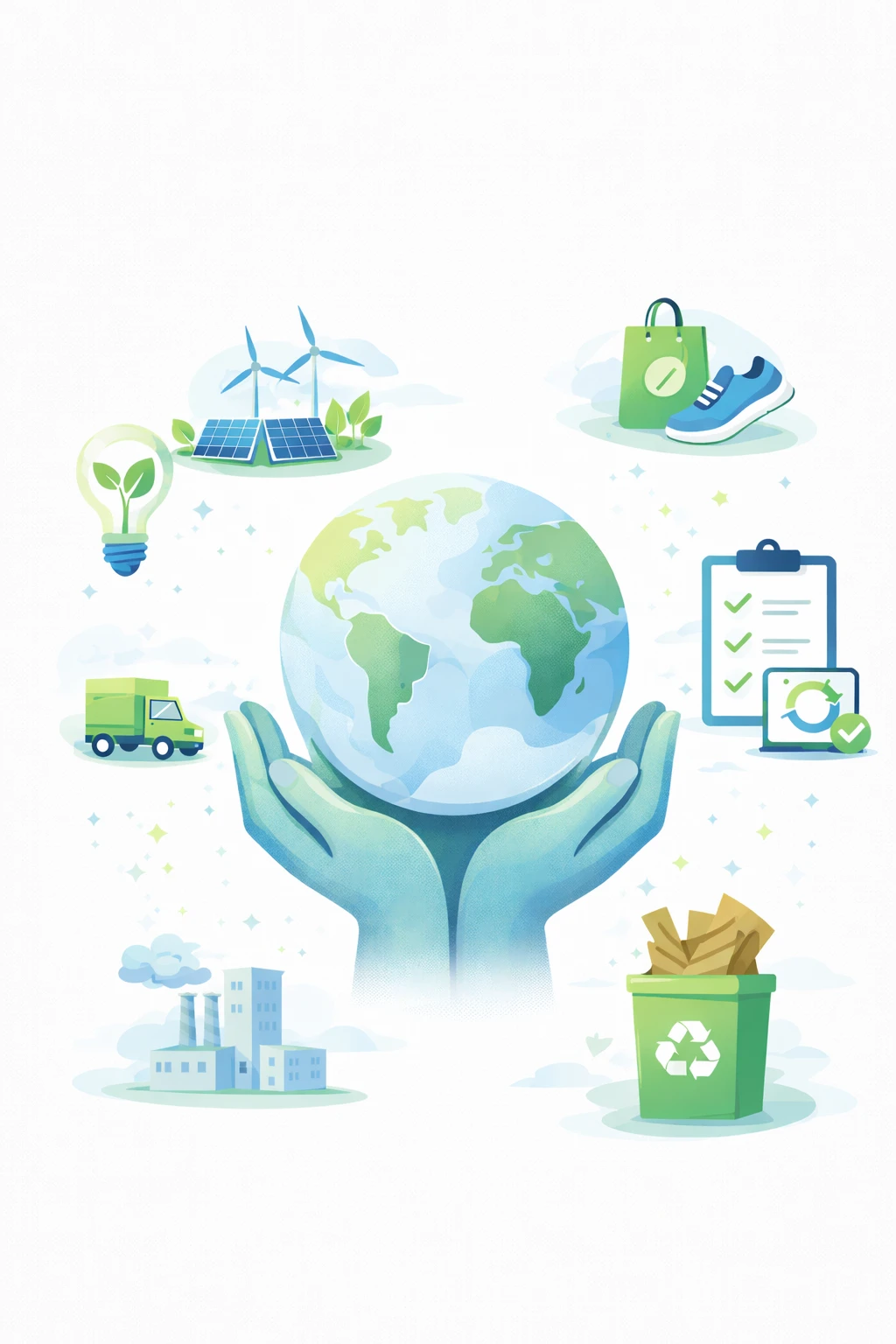
Understanding the EMF Framework
Circular Economy Framework Implementation with Ledger2Carbon
The Significance of the EMF Framework
Reliable circular economy framework implementation begins with a documented scope, accountable data owners and a clear record of the requirements that apply. Ledger2Carbon connects source information to methods, decisions and supporting evidence so teams can explain how each material result was prepared.

Our Circular Economy Services
Circular Economy Framework Implementation: Lifecycle Assessment
The difficult part of circular economy framework implementation is rarely a single calculation. Data arrives from different systems, periods and owners; definitions change; estimates require review; and evidence is often separated from the reported result. A governed process makes those dependencies, gaps and approvals visible.
Sustainable Supply Chain Management
The workflow supports records for Ellen MacArthur Foundation principles. Applicability depends on the reporting entity, boundary, jurisdiction, intended use and current edition. The platform organizes implementation and review evidence but does not replace legal advice, professional judgement, certification or independent assurance.
Product Design for Circularity
We offer guidance on designing products that are easy to disassemble and recycle, promoting a closed-loop system.
Circular Economy Framework Implementation for Business Model Innovation
Our team helps develop innovative business models that support circular economy principles, driving long-term sustainability and profitability.
Get in Touch with US
Reach out to us for expert guidance on carbon accounting and ESG reporting. Our team is ready to assist you with tailored solutions to meet your sustainability goals.
Phone
(359) 889-537-131
contact@ledgertocarbon.com
Address
Mladost 1A, 9 Anna Ahmatova Str., Sofia, 1000
Contact Form
Offices
Sofia
Mladost 1A, 9 Anna Ahmatova Str.
Plovdiv
16 Georgi Valkovich Str.
Varna
90 Tsar Osvoboditel Blvd.
How the workflow is governed
How circular economy framework implementation becomes a measurable programme
Establish a baseline for material inputs, product use, waste, recovery and value-retention activities. Define the system boundary, data owners, calculation rules and evidence. Link each initiative to an objective, responsible owner, timeline, resources and a measurable outcome.
Circularity metrics and decision context
Track virgin and secondary inputs, product durability, reuse, repair, refurbishment, remanufacturing, recycling and safe biological cycles where relevant. Metrics should not be presented without their boundary, denominator and data limitations.
Framework guidance and reporting links
The programme can use Ellen MacArthur Foundation principles. These frameworks provide principles and guidance; they do not automatically create legal compliance or certification. Relevant circularity data may also support ESRS E5 and other sustainability disclosures where applicable.
Standards and applicability
The workflow can organize records for Ellen MacArthur Foundation principles. The applicable edition, reporting boundary, jurisdiction, methodology and verification expectation must be documented for the specific organization or project.
Frameworks are not interchangeable
Legislation, disclosure standards, accounting methodologies, certification programmes and implementation guidance serve different purposes. Shared data may be reused, but scope, terminology, controls and claims must remain specific to each framework.
Frequently asked questions
What information is needed for circular economy framework implementation?
The exact inputs depend on the reporting boundary and applicable requirements. Typical records include source-system data, reporting periods, units, owners, supporting documents, calculation assumptions and review status.
How does Ledger2Carbon support circular economy framework implementation?
Ledger2Carbon organizes source records, methods, evidence, calculations, responsibilities and review steps in a repeatable workflow. It supports preparation and governance but does not replace legal advice, professional judgement or independent assurance.
How is auditability maintained?
Material outputs retain links to source evidence, methods, factors or rules, versions, assumptions and approvals. Reviewers can follow the record from the reported result back to the supporting data and documented decision.
Discover How Ledger2Carbon Transforms Your Circular Economy Strategy
Explore the power of Ledger2Carbon and see firsthand how our platform can streamline your transition to a circular economy. Request a demo today to unlock innovative strategies that enhance sustainability while optimizing your financial performance.